
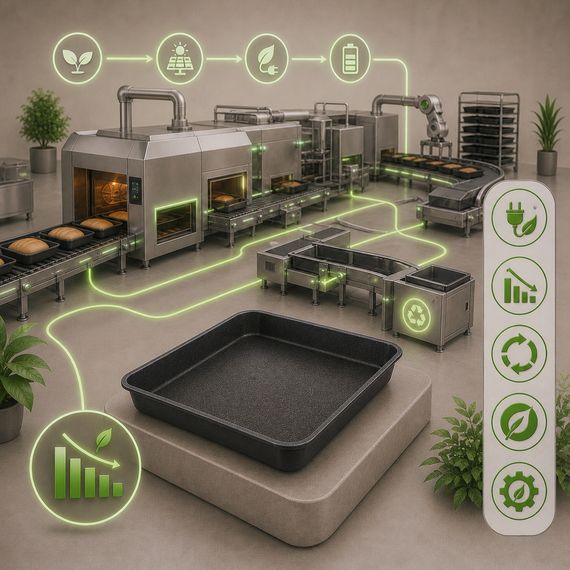
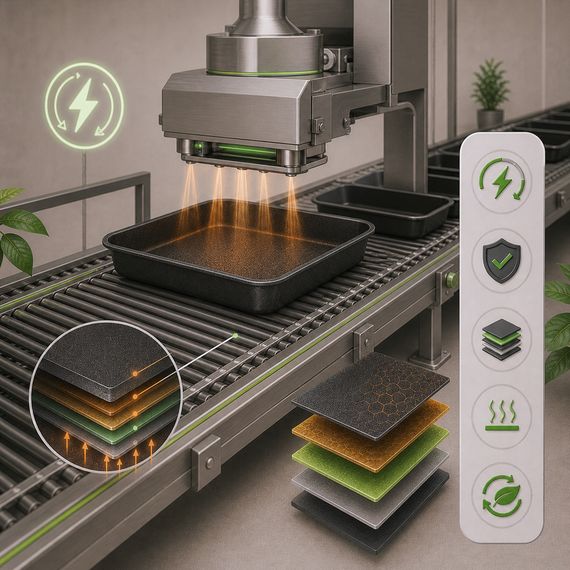
Low-energy production requires an understanding of where energy is used in a bakery. Ovens, washing equipment, handling and rejected production contribute in different ways. A coating may affect part of that process, but it does not establish an energy saving simply because it helps product release.
Measure the relevant process
Begin with energy use for an identified product and production quantity. Record the recipe, oven settings, batch loading and cleaning routine so that later comparisons have a meaningful baseline. Lower total consumption during a smaller production run does not necessarily mean better efficiency.
Where surface condition may matter
Release difficulties can lead to damaged products, repeated handling or additional cleaning. If a coating change addresses those problems, the effect on energy use can be investigated. Any reduction needs measurement; it should not be converted into a fixed promise for another production line.
- Separate oven energy from washing and other supporting operations.
- Record usable output alongside consumption.
- Note changes in rejects, cleaning duration and production interruptions.
- Keep conditions comparable when assessing a trial.
Do not change baking conditions by assumption
A new coating does not automatically justify a lower baking temperature or shorter cycle. Product quality and the site’s process requirements still need validation. The selected system must also suit its intended operating conditions. Use production evidence to decide whether a change contributes to energy efficiency, and keep that finding separate from wider environmental claims about the equipment.