
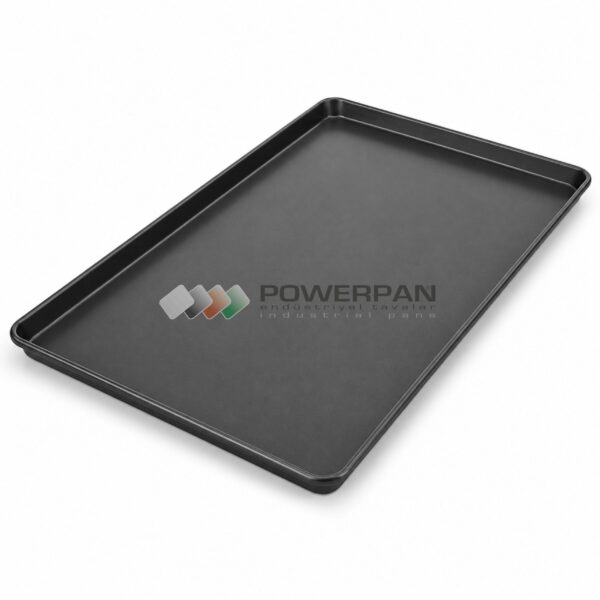
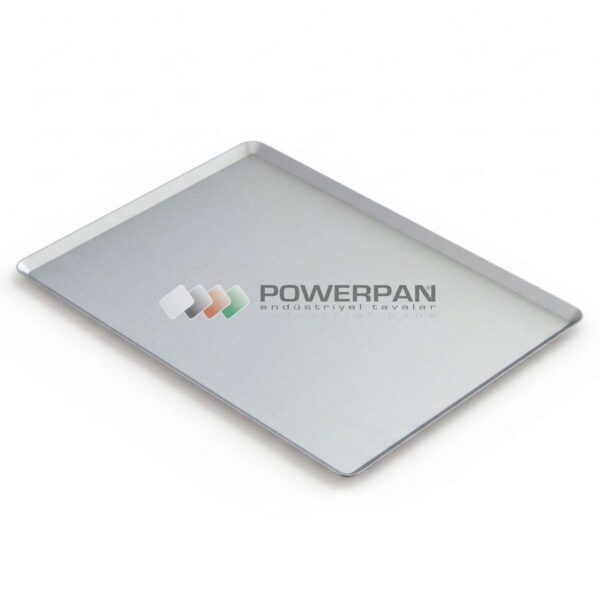
Flat Italian baking trays provide an open support area for breads such as focaccia, ciabatta, and related flatbread styles. The appropriate depth and edge profile depend on the dough and product; not every bread needs the same degree of containment.
Define the usable surface
Specify the base dimensions, rim height, material, and external footprint. A low edge can change handling and dough support, but it does not independently create a particular crumb or crust. Include how the dough is loaded and whether it proofs on the tray.
Check the baking arrangement
Identify the oven, supports, loading pattern, and release method. A flat tray should not be assumed equivalent to a perforated or sloped-wall design simply because the nominal size matches.
- Provide the bread style and dough context.
- Describe baking, cooling, and removal.
- Include cleaning and stacking methods.
- State coating and food-contact documentation needs.
Select the surface system for the substrate and operating conditions. A trial can assess the actual product where the design is changing. For worn trays, inspect base distortion and rim damage with coating condition; renewal cannot be assumed to restore an unsuitable shape or resolve an oven-related baking issue.