
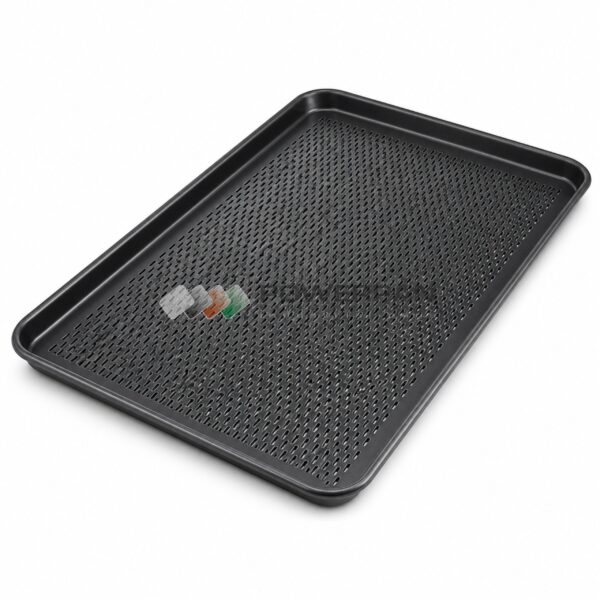
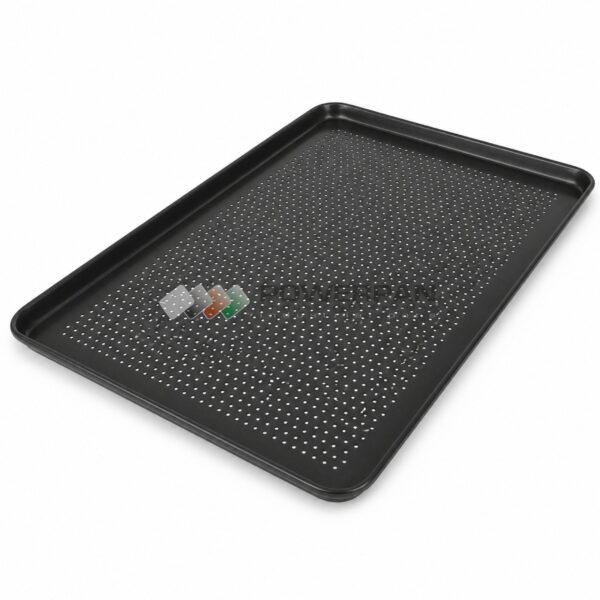
Perforated Italian baking trays provide openings beneath breads such as ciabatta and related styles. Their suitability depends on dough support, loading, and the oven process rather than a guaranteed crisp-crust result.
Choose the perforation with the product
Specify hole size, pattern, spacing, and the surrounding construction. The dough’s consistency and loading method affect whether the openings are appropriate. Perforation changes the support arrangement and does not imply intended exposure to direct flame.
Compare under actual baking conditions
A solid and perforated tray should be evaluated with comparable product, load, and oven position. Recipe and process still influence crust and internal structure. A coating should be assessed for the complete substrate and use conditions.
- Provide the bread and tray drawings.
- Identify proofing, baking, and release.
- Check rack fit and handling features.
- Describe cleaning and relevant documentation needs.
Inspect the area around openings, rims, and body for damage before considering renewal. A fresh finish does not repair distorted supports or guarantee a particular bread texture. Confirm the proposed design and care requirements before assuming a perforated tray is interchangeable with the equipment already in use.