
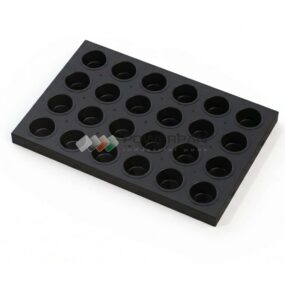
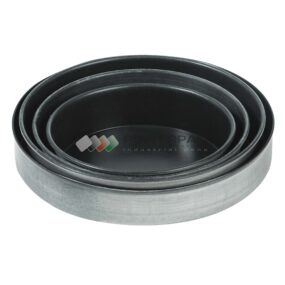
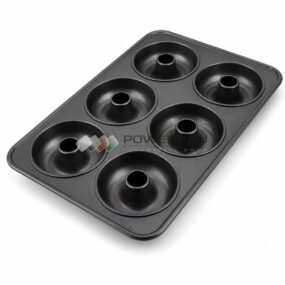
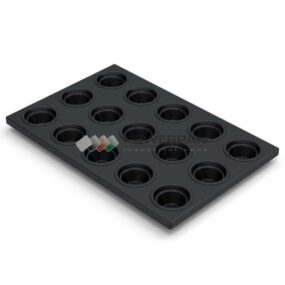
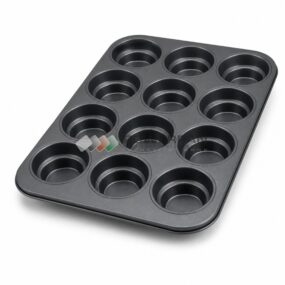

Cake and pastry pans support products ranging from individual portions to layers for assembled cakes. Shape, depth, batter, and release method all influence the design; the category should not be reduced to one standard cavity.
Define what the pan must form
Identify the intended outline, base detail, and finished product. Include batter type, filling weight, and the production method. Deep cakes and thin layers can need different geometry even when their external dimensions look similar.
Consider release and cleaning early
Sharp transitions, detailed faces, and deep recesses affect how the product and residues are removed. The coating should be considered with those features rather than expected to solve every demolding problem.
- Provide cavity and tray dimensions separately.
- Describe filling, baking, cooling, and release.
- Check fit with racks and handling equipment.
- State material and food-contact evidence requirements.
For renewal, inspect the mold body and detail alongside the surface. Distortion or damaged edges may affect the cake even after recoating. Confirm the proposed configuration and operating conditions rather than assuming that a pan intended for one batter or process will suit another without assessment.