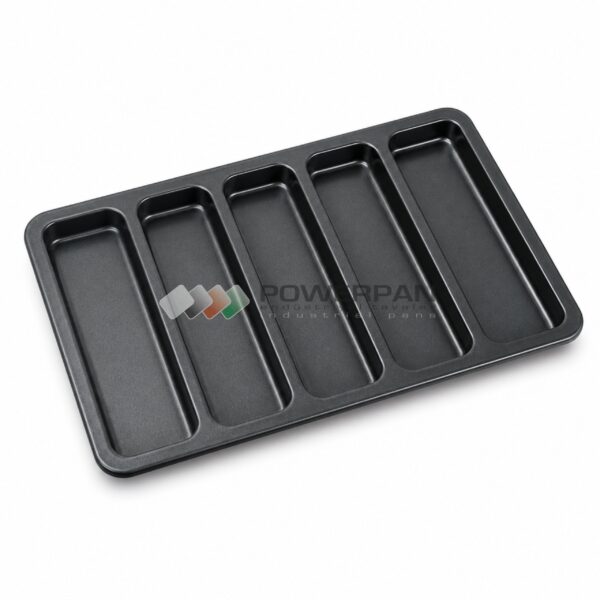
The 5-cavity press-stamped bread baking pan is a mold for producing sandwich bread, with five rectangular cavities and a stamped surface pattern. It does not have the same portion arrangement as a three-cavity jumbo design. The name five-cavity alone does not define internal cavity dimensions or baked slice size.
Cavity dimensions and target bread
The intended bread’s width, length, height, and slice shape are starting information for the quote. Determine dough portion and expansion allowance together with this geometry. Cavity depth or dough weight cannot be inferred from external tray dimensions. Show spacing between cavities and edge margins separately on the drawing.
Although a five-cavity design contains more cavities, it is not always more efficient than a three-cavity pan. Large and small portions serve different production targets. Make comparisons based on the same baked product requirement, oven load, and operating arrangement.
What press stamping does
A press-stamped surface refers to line or pattern geometry. Assess how a parallel or other stamped arrangement appears on the product using a sample and drawing. The pattern alone does not establish a particular flavor or browning result; the recipe and baking conditions also affect the outcome.
- The appearance of the stamped pattern on the target bread.
- Differences in product shape and baking between cavities.
- Product release at the bottom and corners.
- Dough and oil residues left in the lines.
This pan must not be treated as a sandwich press that compresses a baked sandwich between two hot surfaces. Clarify its purpose as a bread mold for oven use. Do not confuse the equipment name with the method of preparing the finished sandwich for service.
Coating, maintenance, and ordering
Define the coating option by product code, food contact scope, and maintenance instructions. Include stamped lines and corners in the final inspection plan. Do not use a metal point against the pattern when removing products. After cleaning, check the recesses for residues; set damaged surfaces aside for inspection.
Send Powerpan the five-cavity structure, target bread dimensions, stamped pattern, and oven rack information. The quote must clearly state external dimensions, cavity geometry, body, and coating. In the first trial, monitor differences between cavities using the same dough portion and process. Do not assume exact dough weight, baking time, pan weight, or daily capacity without a current product drawing or production trial.