

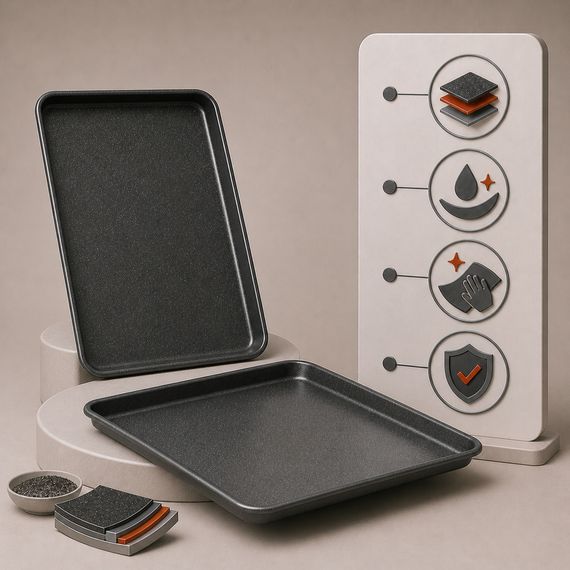
Planning a tray coating specification
Tray coating should be assessed for the complete tray and production cycle. Flat areas, perforations, raised edges and supporting frames create different working and handling surfaces. The proposed coating must fit both the product being made and the way the tray moves through the line.
Describe use and condition
Provide the tray dimensions, base material and existing coating. Identify food-contact surfaces, guide contacts and any areas that must remain uncoated. Include heating, cleaning, release and stacking conditions.
For refurbishment, inspect the tray for distortion, damaged edges, corrosion and frame defects. Surface renewal should not be used to conceal an unresolved structural or dimensional problem.
Agree checks before a production batch
A trial should compare product removal, deposits and cleaning under representative conditions. For perforated trays, also check that the proposed application remains appropriate to the openings and intended airflow. Confirm coating limits and supporting food-contact information where relevant.
Send photographs, drawings or measurements and quantities with the enquiry. State the current problem and the equipment the tray must fit. The final specification should address that tray design and process, rather than assume a universal coating choice based on tray size alone.