
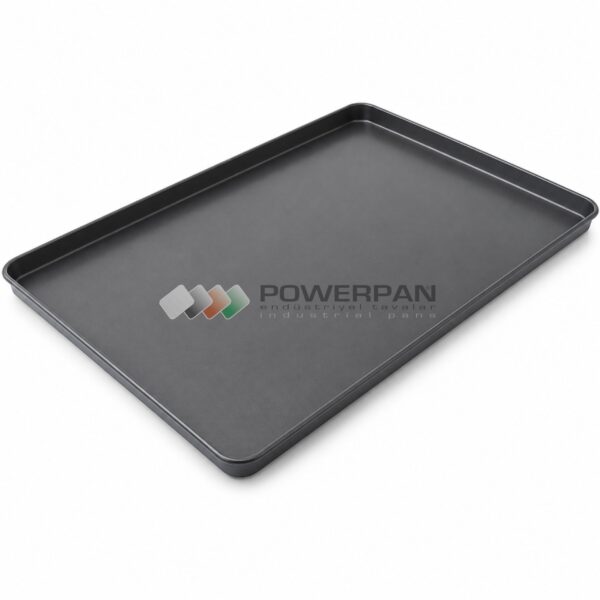
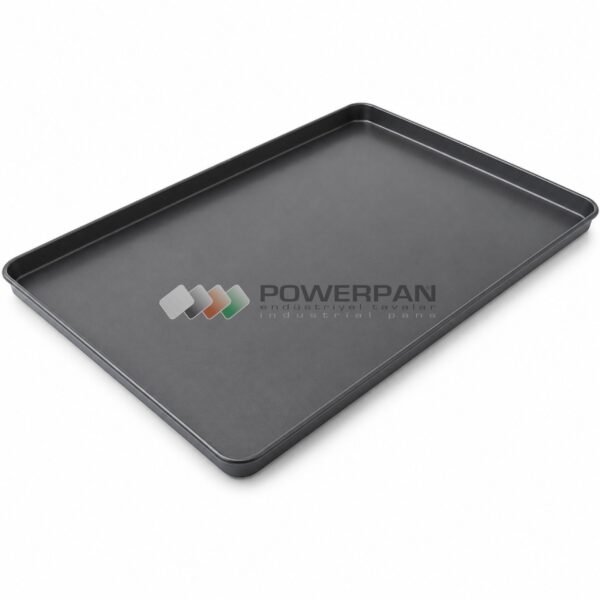
Baklava trays support layered pastry through assembly, baking, and the handling steps that follow. Depth, base condition, rim shape, and the cutting method all matter; the pan does not determine the quality of the layers or syrup absorption by itself.
Describe the full process
Identify the baklava style, intended thickness, and loading method. Explain when cutting and syrup application take place and whether the product remains in the tray for service. Those stages create different contact conditions from baking alone.
Choose geometry and surface together
Specify external dimensions, usable base area, depth, and corners. Check rack and oven fit. Any coating needs to suit the substrate, operating cycle, tools, and cleaning method rather than rely on a general non-stick claim.
- Provide a drawing or reference tray.
- Identify cutting and serving contact.
- Describe cleaning products and utensils.
- State relevant food-contact documentation needs.
Confirm the selected system before assuming that every cutting tool or heating method is appropriate. For renewal, inspect flatness, rims, and body damage as well as worn coating. A fresh surface cannot correct distortion or guarantee even browning independently of the oven and product.