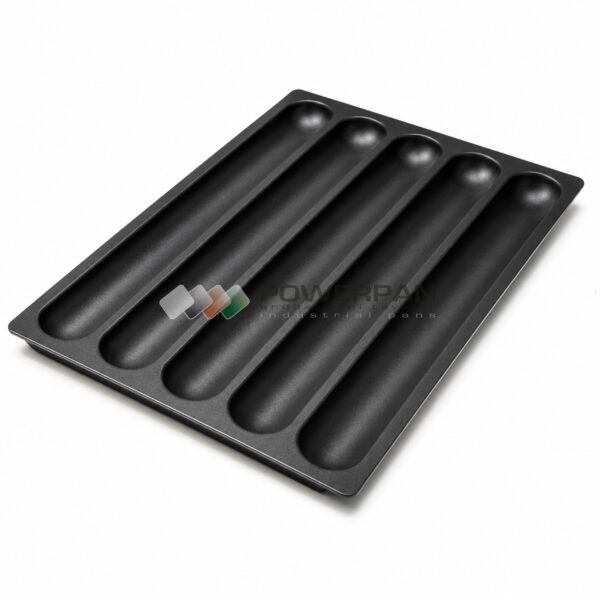
A roll toast pan is a sandwich bread mold whose internal cross-section must be assessed together with the bread shape. Powerpan’s 2024 catalog lists this name as a product entry; a long cylindrical form must not be inferred from the name. Assess the mold’s cross-section, length, and lid structure together. The product name alone does not imply a round cross-section or a particular slice shape; clarify the target form through a drawing.
Body shape and any lid movement matter in a sandwich bread mold. Sticking that starts at one end or a particular sidewall can relate to mechanical fit as well as the surface. A coating does not automatically repair a bent body or a lid that binds.
Lid and end areas
Inspect the lid interior, rails, or other connection structures according to the mold’s actual design. Assess how coating thickness affects movement clearance. Separating areas to be coated from surfaces to be protected makes the application scope clear.
Cleaning tools must reach the mold’s ends. Choose a method compatible with the system instead of aggressive scraping. Check separately for residues at the ends or product filling the rails. The same brush length or detergent recipe cannot be specified for every mold.
Recipe and removal conditions
Assess dough weight, fermentation, and the baking program together with the target cross-section. The same form can produce different results with different recipes. Lidded use requires a separate check of the recipe’s expansion behavior.
- Internal cross-section, length, and lid drawing.
- Dough weight and target product shape.
- Oven layout and removal method.
- Cleaning and existing surface damage.
Share this information with Powerpan when requesting a product or coating. System selection should not be determined automatically by daily production count. Assess operating limits and food contact scope through the relevant technical documents.
Determine how the bread will be cut for slicing or filling before selecting the mold. The internal cross-section affects portion appearance, while external mold dimensions affect oven placement. Showing these dimensions separately on the drawing avoids an unclear shape expectation based on the product name.
When refurbishing a used mold, inspect the old layer and metal body. Remove the mold from production if coating separation occurs. After initial use, inspect the bread ends, sidewalls, and the area contacting the lid surface. Confirm current product dimensions, lid design, and delivery options before ordering.