
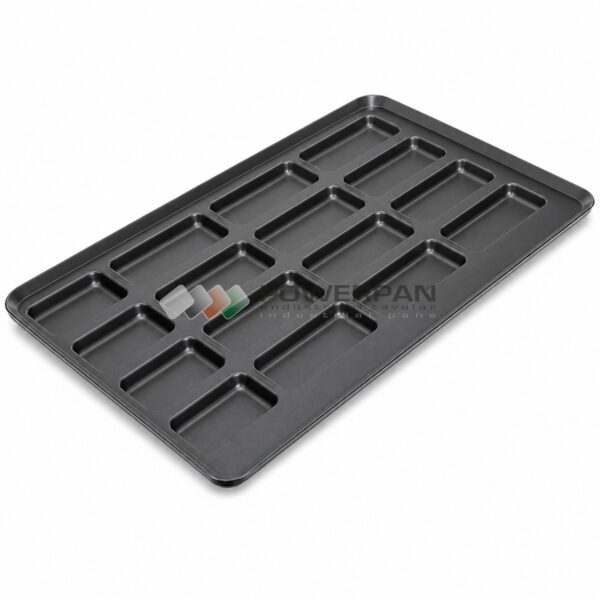
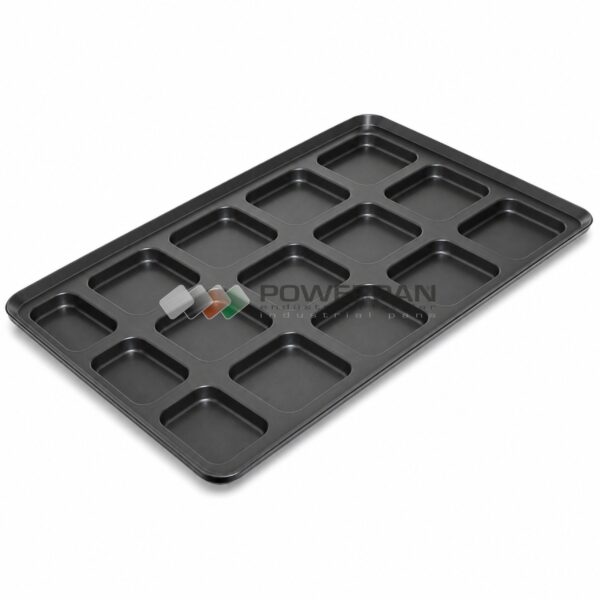
Square panini trays and moulds support a defined bread or sandwich format where portion shape matters. The intended operation must be clear: baking a square bread portion and pressing or toasting a filled sandwich place different demands on the equipment.
Define the product and process
Specify the required length, width, depth and product profile. Explain whether the item will be used for bread production, a subsequent heating stage or another operation. A square shape does not, by itself, make one pan suitable for every panini or toast process.
Check the equipment dimensions
Distinguish cavity measurements from the tray’s outer footprint. Rim shape, support points and the number of portions must suit the equipment and handling method. If a press or contact-heating arrangement is involved, identify it rather than assuming compatibility from the product name.
- Provide the desired portion dimensions and a drawing or reference item.
- Describe loading, heating and release.
- Identify the base material and any existing surface problems.
- Include cleaning methods and the food-contact documentation required.
Select the surface for the actual use
The coating needs to suit the substrate and operating conditions. It cannot ensure uniform portions independently of filling or dough control and equipment geometry. For renewal, inspect distortion, edges and cavity condition alongside coating wear. Confirm the proposed design and system before assuming that a tray intended for one operation can also serve another.