
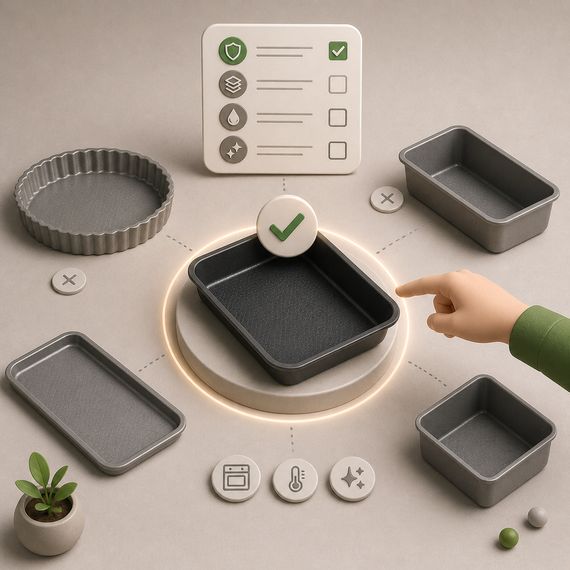
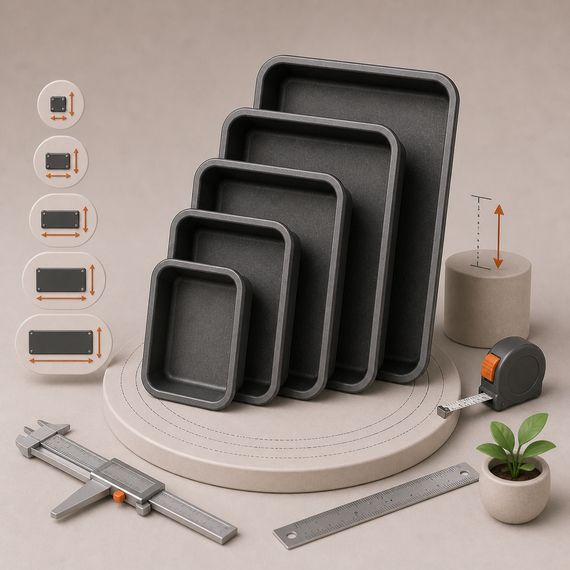
Pan selection begins with the product and the production line that will handle it. A pan’s nominal size is only part of the decision: cavity shape, depth, material, coating and handling clearances all need to fit the intended work.
Define the product geometry
Identify the intended bread or pastry shape, dough or batter weight and the space needed for expansion. For cavity trays, distinguish the cavity dimensions from the tray’s external dimensions. The same outer footprint can accommodate very different layouts.
Check the complete equipment route
Compare the drawing with racks, conveyors, oven supports and loading equipment. Include rims, reinforcement and features used for stacking or lifting. An item that fits through the oven opening may still be incompatible with its handling system.
- Confirm the usable baking area and external clearances.
- Describe loading, release, cooling and stacking methods.
- Record the product mixture and operating cycle.
- Identify the cleaning routine and food-contact documentation needs.
Select the surface with the pan
A coating should suit the substrate, geometry and conditions of use. Do not select it solely from a claimed service life or layer count. If replacing existing pans, explain what works and what needs improvement; a reference sample and photographs can make the differences clear.
For repeat orders, keep an approved drawing and revision reference. Check any proposed change before assuming that new and existing pans will remain interchangeable on the line.