
Assessing used pans before a coating decision
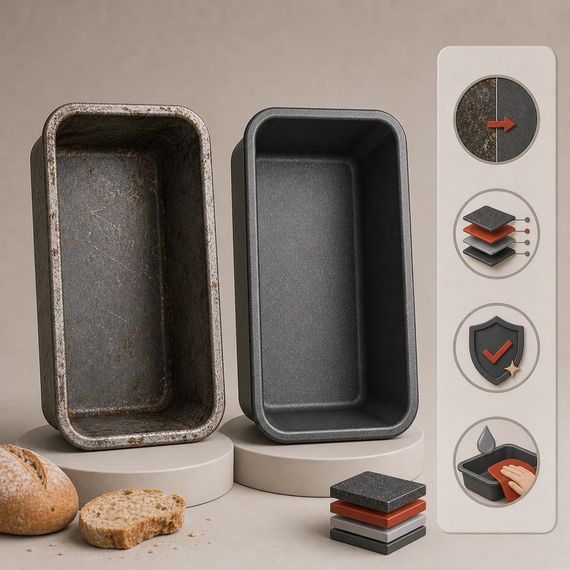
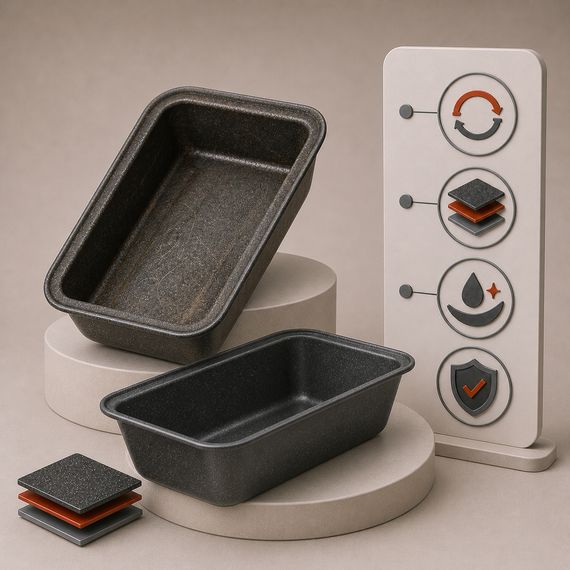
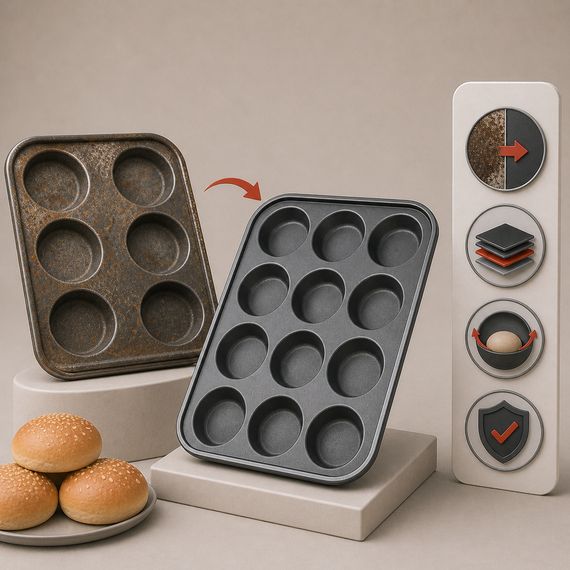
Used and aged pan recoating begins with the condition of the equipment, not simply the appearance of the remaining coating. A pan may have a renewable working surface while another with the same design has damage that makes further use unsuitable.
Separate coating wear from structural defects
Record the substrate and previous coating where known. Inspect the frame, cavities, rims, welds and other connections for distortion, corrosion or cracking. Explain whether problems affect release, cleaning, fit or product shape.
Stripping and coating do not restore missing metal or correct every dimensional fault. Agree the repair and rejection criteria before sending an entire inventory for refurbishment.
Compare practical options
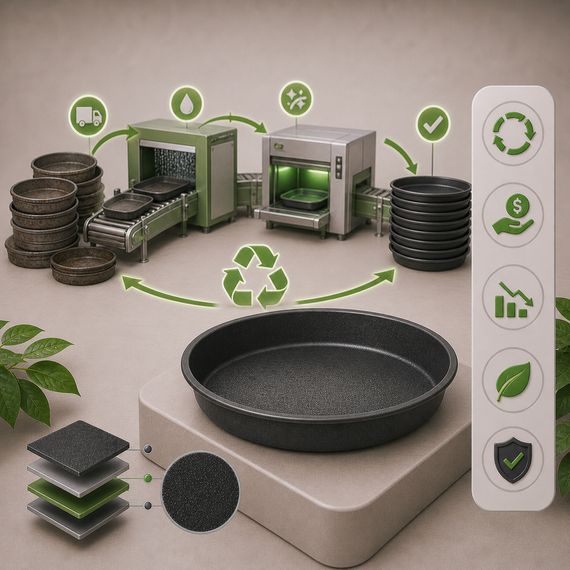
For equipment suitable for renewal, identify the proposed coating, preparation and inspection requirements. Confirm operating and cleaning limits and any food-contact documentation needed for the intended use.
A representative trial can compare release, deposits and coating condition under the actual production cycle. Include photographs, measurements, quantities and equipment availability in the enquiry. Compare refurbishment with replacement using the inspected condition and application requirements, rather than assuming that every old pan can be renewed or that recoating guarantees a fixed saving.