
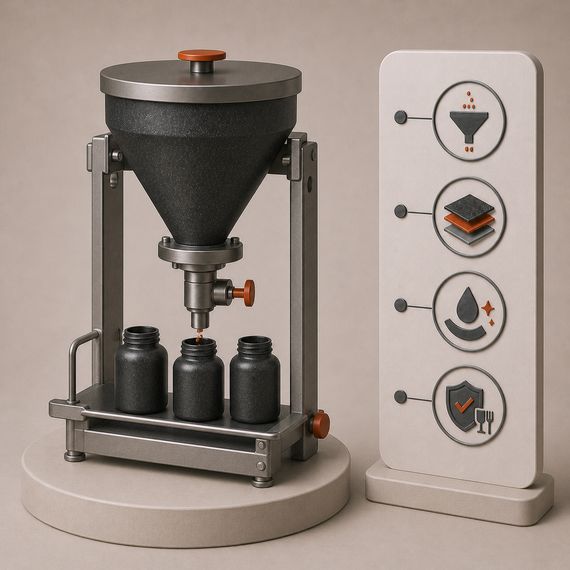

Assessing the working surfaces of a hopper
Hopper coating selection should consider the material entering the hopper, its movement and the equipment’s geometry. Deposits or interrupted flow may involve the surface, but they can also reflect an unsuitable outlet, moisture conditions or another process issue.
Describe the component and material
Provide the substrate, dimensions and photographs or drawings. Identify the working faces, outlet, joints and surfaces that must remain uncoated. Describe the contacting material, temperature, cleaning procedure and any mechanical contact.
For used equipment, record corrosion, distortion, damaged joints and previous repairs. Confirm whether refurbishment is appropriate before specifying a removal or preparation method.
Test against the actual process
Agree what an acceptable result means, such as a defined change in residue or material release under comparable operating conditions. A representative trial should use the actual material rather than assume behavior from a generic coating description.
Request the proposed coating specification and relevant food-contact or chemical-compatibility information. Include quantities and installation interfaces in the enquiry. The coating should be considered as one part of the component and process assessment, not as a guaranteed remedy for every flow or cleaning problem.